

 With Toukan Labs
Clinical software used for nearly twenty years, rebuilt for the cloud in twelve weeks and now rolling out across one of the world's largest eye care networks.
- 12 weeks
- from first workshop to ready for clinics
- 6
- clinical test types rebuilt, plus 10 refraction and orthoptic tools
- 3,000+
- automated tests on every change
- Networks
- of clinics can adopt it at once, not site by site
Almost every large organisation we walk into has one: a system its people rely on and nobody wants to touch. In eye care, COMPlog is one of them.
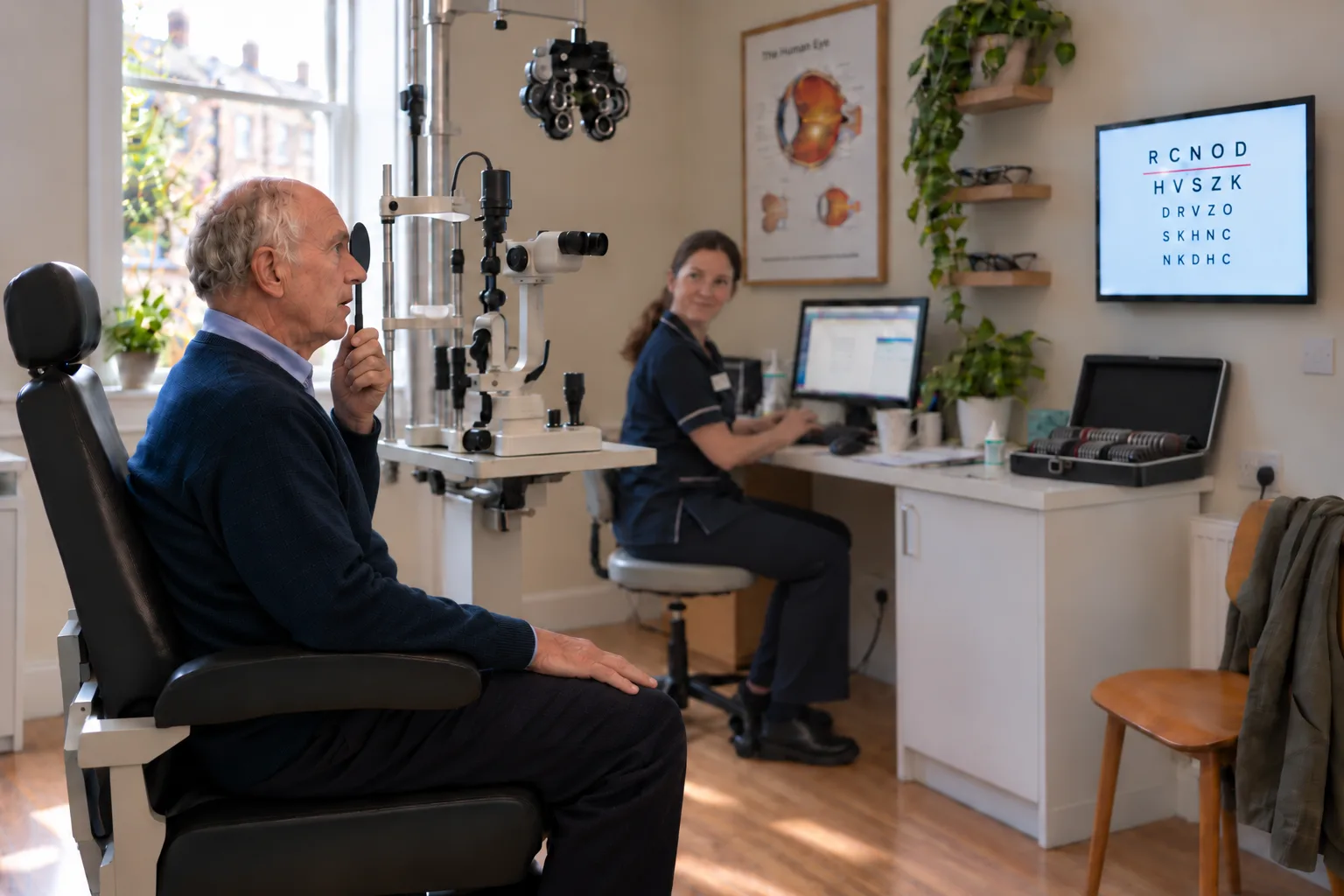
Developed at Guy's and St Thomas' and validated against the gold-standard eye chart in the British Journal of Ophthalmology in 2008, it is one of several computerised systems that measure how well people see, and it has been used in clinics in the UK and abroad for nearly two decades. Like a lot of healthcare software it was built for Windows desktops and installed one clinic at a time, an approach now reaching the end of its life.
Rebuilding a medical device for the cloud
When Toukan Labs, the eye care software company now bringing COMPlog to market, asked us to rebuild it for the cloud and lay the agentic engineering foundations to keep it secure, safe and maintainable for years to come, we set ourselves a clear mission: a version with no software to install, where the test runs in a browser on standard hardware and the clinic's own calibrated screen, and the results feed straight into the patient's electronic record. Done well, that turns a rollout that used to happen site by site into something a whole network of clinics can adopt at once.
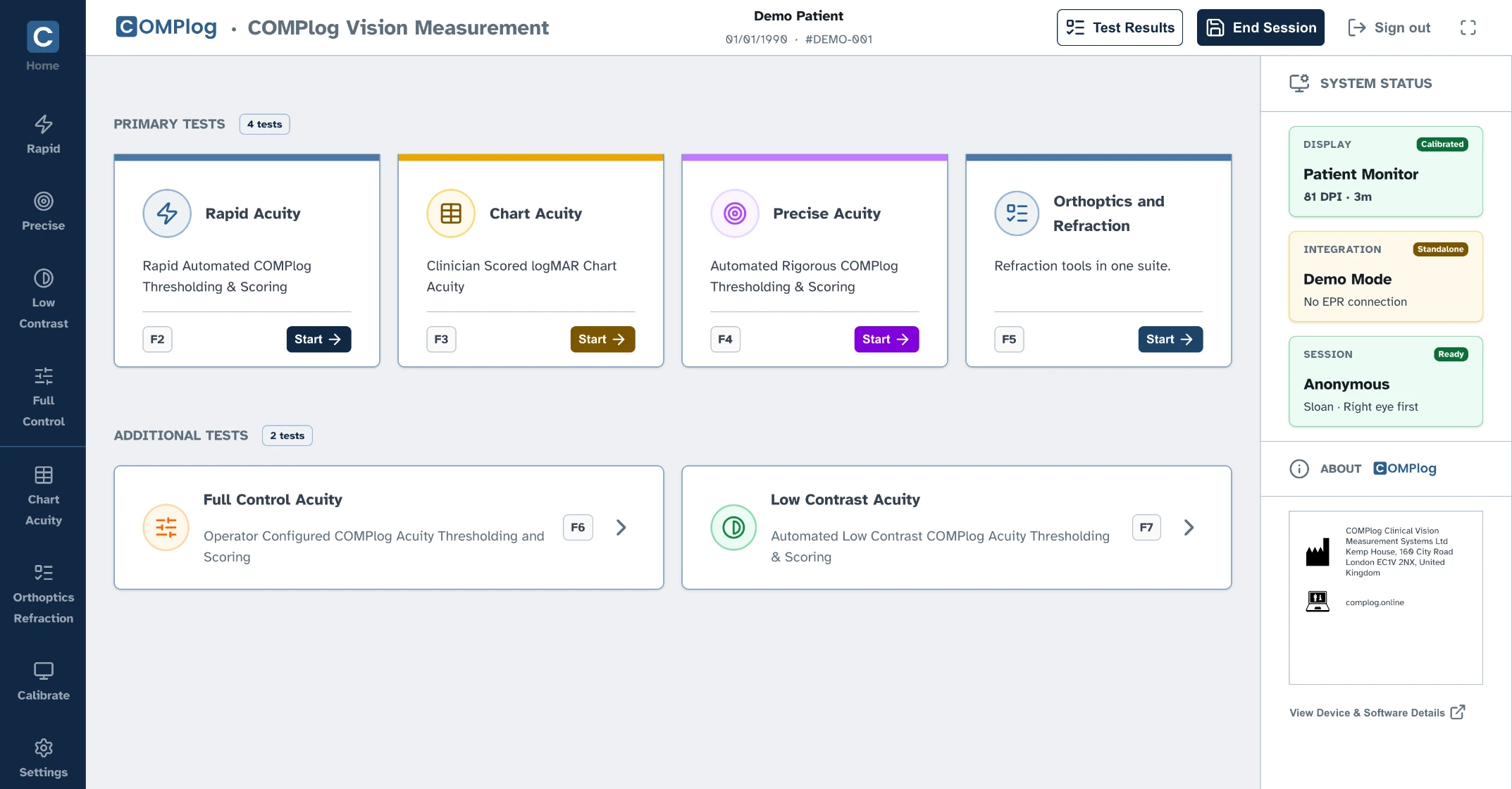
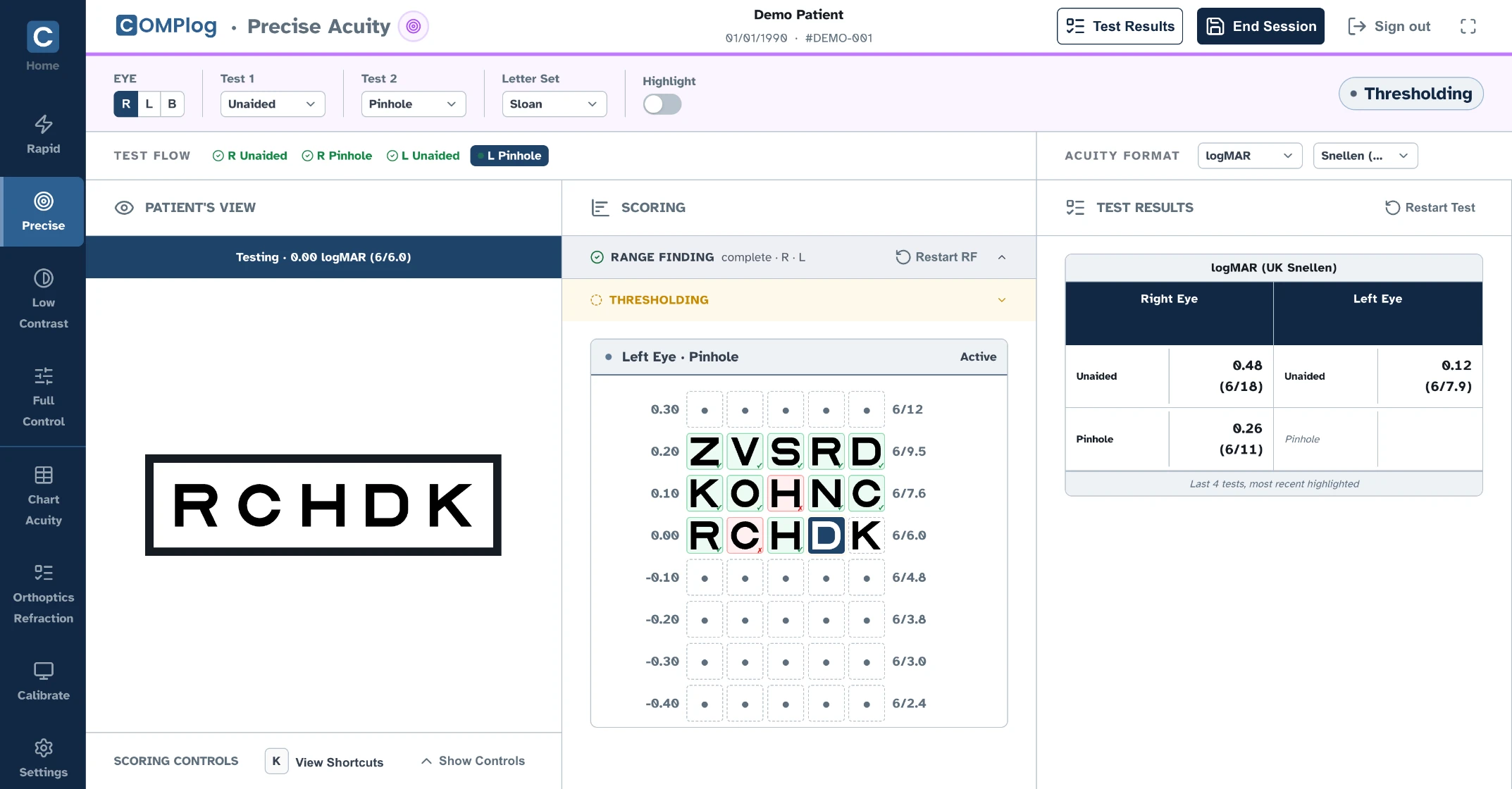
COMPlog is a medical device, and that set the bar for everything we built. Every letter on every screen had to be the right physical size for the patient's distance, on each monitor it was calibrated for, and the scoring had to follow the same clinical method as the original. We had twelve weeks to get that right across the full suite of tests, from automated sight tests to refraction and orthoptic tools, all running across two linked screens and every one behaving exactly as it does in the version clinicians already rely on. Throughout, we worked alongside one of the UK's most respected eye surgeons, who created the original COMPlog.
Keeping it familiar for clinicians
A lot of our thinking went into the psychology of the change. Clinicians who have tested sight the same way for years don't want to relearn their tools in the middle of a clinic, so the new COMPlog had to feel modern and lighter while staying familiar enough that they could sit down and work the way they always have, with the same screen layout and scoring habits and everything around them calmer and quicker.
Getting every letter exactly right
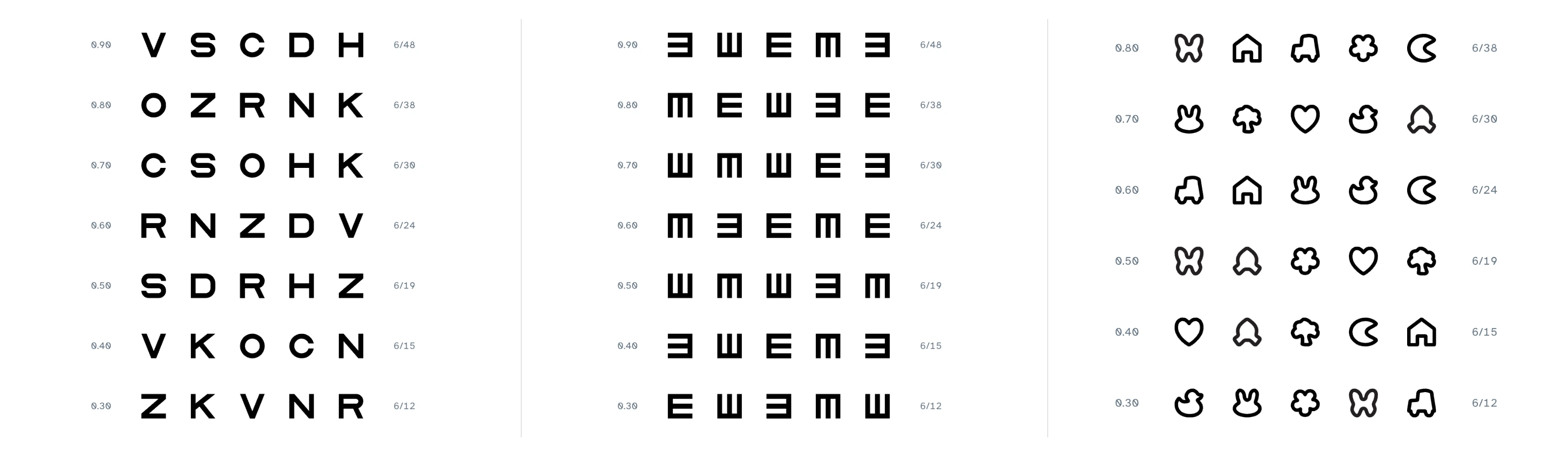
The hardest engineering was in making every test exact on any screen. Each set of optotypes, from the letters adults read to the picture charts used for young children, has its own clinical proportions and spacing, and every one had to be drawn at its true physical size on whatever monitor the clinic owns, never shrunk to fit. When a line of letters is too wide for a smaller screen, COMPlog splits it into smaller groups that still score as a single line, and every result converts cleanly between the formats clinicians work in: logMAR, UK and US Snellen, and decimal.
Twelve weeks of agentic engineering
Doing all of that in twelve weeks came down to agentic engineering, with AI agents doing much of the build and our engineers directing and checking every change. We built the discipline into the project itself: a shared guide that gives every agent the clinical rules, more than 3,000 automated tests on every change, and a release process that won't let a significant update out without clinical safety sign-off. It let us move a regulated product this quickly without cutting corners and left Toukan with software it can maintain with confidence, and their own engineers have since adopted the same practices in their wider work.
From India to the NHS
Twelve weeks after our first workshop, the new COMPlog was ready for clinics. It is now being rolled out and tested across one of the world's largest eye care networks, with hundreds of clinics across India, and it is going through testing with the NHS ahead of implementation across multiple trusts.
This is the work we enjoy most: software people depend on, a real deadline and no room for error. If you're sitting on a system that still does its job but belongs to another era, one nobody wants to touch for fear of breaking it, we'd love to talk about moving it forward without putting what works at risk.

 Commerce BuyBridge: marketplace arbitrage, automated Open

 Audit Captier: every audit request in one place Open

 Charity Sheffield Young Carers: seeing the difference support makes Open
 Product Switcher: every Claude account in one menu bar Open

 Product Barrii: introducing the room Open

 Product Planit Teachers: the whole lesson, written for you Open
Straight to the founders
Want to build something like this?
Tell us what you are working on and we will tell you how we would approach it.